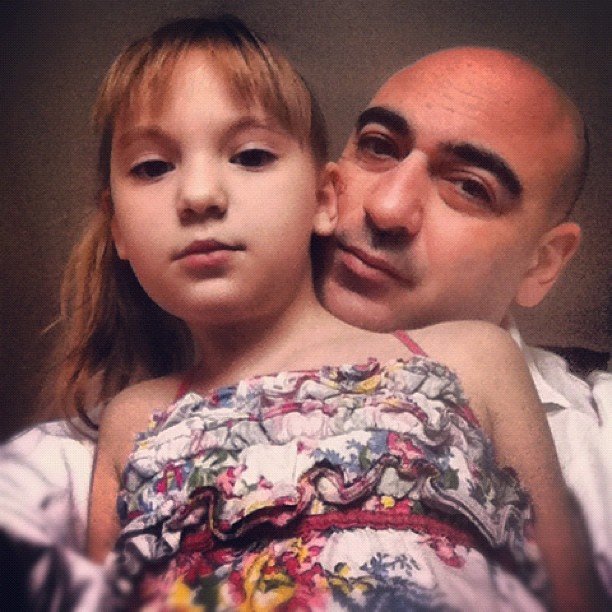
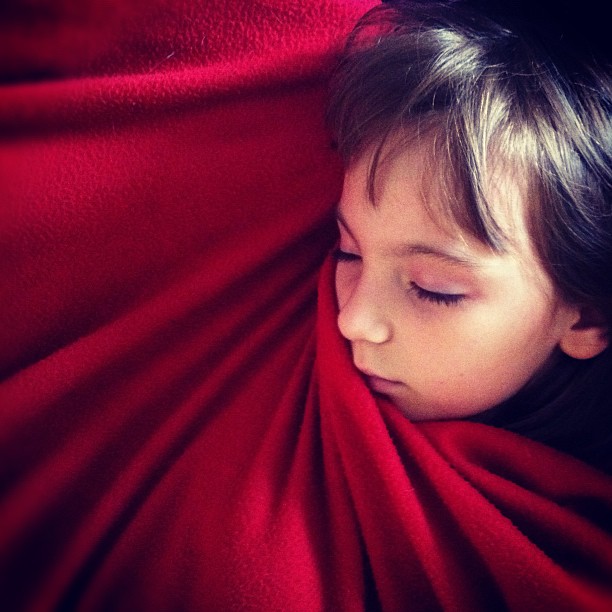
27 August 2012

without/with

I am alone in the house after I bring her downstairs on a Thursday with that sudden missing tooth feeling, as your tongue searches in the space for what was always there. 

I spend something like ten hours alone each week at the most. This is unexpected. I decide to go to the market, the red Eataly bag slung across my shoulder. My hand reaches out by instinct so she can grab onto my pinky. I buy arugula, and good olive oil. Suddenly my accent sounds ok, calm, effortless. Can I be without her? I ask myself, as I pass the ice cream lady. I see a man in an old grey suit, recognizing him from a picture I took with the Leica some weeks ago. He had flowers in his hand, upside-down as they carry them here. 


There is a snap in my stride, like when I used to walk down First Avenue after ducking into Ferrucci's for good olives and fresh semolina bread. I would break off the heel and shove it in my mouth as I passed Stromboli on 8th and then the Indian spice place, a few steps down from the street, the combination of coriander and ginger, anise and cumin wafting out to find me on the cracked sidewalk. 

I buy some tomatoes from a cart behind Kievskaya, jumping in front of an old lady who does not believe the green grapes are seedless.
"Hello." I say to the man with the giant, sunburned, box-shaped face. 
I want a hello from him. I buy a lot of plums and peaches here.
He nods, smiles

The air is cooler by the river. The bag bounces on my shoulder as I turn into our courtyard. A young woman in perfectly ripped jeans looks up at me in slow motion. A pink baby t-shirt, that telltale cascade of blond curls, the heels like circus-stilts, the sparkle of jewelry, the over-glossed lips. She could be going out early, or she is one of the prostitutes that lives in our building, drifting back and forth discreetly to the monolithic hotel next door.

The tall, sheepish neighbor holds the door to the elevator for me. Even he cannot believe I am not with E in the afternoon. We ride in a brief silence. I wonder if he is going to smoke a cigarette in the hallway or go right inside. His collie scratches at the door as we reach our floor. 


On Sunday we take the metro to Arbat. There are still things to buy for school next week - more white shirts, black Mary Janes, a backpack of some kind, bookmarks, gym clothes. E wants black things decorated with skeletons, but then decides on some Hello Kitty instead, and a few well-placed ghosts. I breathe out. The last part has kept me nervous, and now it has been solved. Her feet are the only part of her that seems to grow.

We buy her favorite frozen yogurt, and look for free chairs to sit in. The tables are a cramped, jumbled mess. A man in a jeans jacket sits alone at one, and with a quick jut of his chin I see we can share the table with him. E spoons into her pomegranate masterpiece, and I notice he has nothing but a half-empty bottle of beer. His face is red, one of his eyes circled in plum colored skin. E rolls her eyes at me. I shrug my shoulders, and we turn to each other, telling stories about new Lego girls, and a building E is designing. She wants to put the toys on the sixth floor. The man interrupts us, stammering in a mix of Russian and stabs at English.
"I see you and your daughter, and I realize I am a fool, not to have children." He says.
I nod, say thanks.
He keeps trying to talk with us, about politics, about life.
E makes a face at me.
"Pop, he is a drunk guy!" She whispers.
"We'll go in a second." I answer. "He just wants to talk. I think nobody listens to him."
Another man comes to the table, asks the man in the jeans jacket for 100 rubles. They argue for a moment about what beer to buy, and then he hands him the money.
E's yogurt has turned to a sort of soup.
The man asks me to watch his seat, as he runs inside to use the bathroom. We sit for a moment. I want to go, but something makes me want to show him that he counts, that someone respects him.

Music from the teenagers on the corner makes its way to us, strumming on guitars that are out of tune, their voices hoarse and crude. I adjust our bags. E puts her hands on her knees and looks up at me.
"Ready for school next Saturday?" I ask her.
"Yes." She says, without hesitation.
We leave.

20 August 2012

one eye, two slices

There is nothing remarkable about the day. Another dance between questions and clients, materials, fonts, software, scripts and rewrites. I figure out what to make us for lunch. I put some pants on at one point, as rain splatters the windows and the air turns cool.

E turns a tiny chair into a post office and leaves folded papers there for me to open. They are birthday cards, glued shut with a smear of plastilene. They say things like "I luv you so much happy birthday p.s. i gave you a prezent". There is a hand-drawn ballerina with freckles that falls to the floor when I open it.


The hour arrives to shower and get dressed, to cram paper and pens into a bag. E decides to wear a sparkly purple dress with sneakers that blink. We take the metro, changing trains and exiting through the same station that used to lead to the office. We turn left, and walk for a few minutes.

Here is a museum, and an exhibit of modern paintings. I pay, and we walk inside, her hand dangling from mine, her neck craning forwards as we wander through rooms. She stands in front of each canvas, one foot propped on its edge, her hands turning. She reads the little cards next to them, and says nothing. She looks up at me sometimes, a smile turning the corners of her mouth. I ask if she wants to know something about them and she nods yes. I explain who Pirosmani is, and how he painted on cardboard, and wood and anything he could find. She nods, as I tell her how he paid for his dinner with paintings, and that was how he survived.

Old women sit in chairs, leaning to see if E will try to touch anything. She does once, but they do not see her. They smile bland smiles at us as we go from room to room.

"I think I saw enough." E tells me after twenty minutes.
"Ok." I say, trying to figure out where the exit is.
We turn into one room and there is no hallway from it, a dead end. E stands in front of one last painting. I ask her what it says, as there are words scribbled on it. She shrugs her shoulders.
I think it says something about a beast, or a creature with one eye.


Outside, we sit on a park bench. A pigeon shits and it falls on my shoulder. E erupts in laughter as I pull the white shirt off and try to wash it with the water left in her bottle.
"Whattayagonna do?" She says, shrugging her shoulders.
"You know this means good luck, right?" I tell her.
She makes a face.
"Come on, and on my birthday?" I say. "That is amazing."
I call N, who is close but in traffic.
"It means a lot of money." She says.
She will park soon, and we will sit in a restaurant on a veranda. Friends will come. A bottle of wine will be opened. More gifts, toasts, plates of pkhali and lobiani, mchadi and sulguni, khinkali and lulia kebab. The hour will grow late and E will have curled up on the sofa.
No, no candles in a restaurant dessert. Just home.

The next day, E says we still need to make a cake.
"You aren't older until you blow out the candles." She tells me.
Late that night, I do make a cake. Olive oil instead of butter, cloves, fresh ginger, coriander seeds, nutmeg, ground almonds, honey and nine sour plums. By the time it is cooked, E has gone to sleep again. N plants two candles in it, still warm and does her best Marilyn Monroe. I wish she sang more often. Her voice is sweet and kind.
I make my wish.
I eat two slices.


13 August 2012

the arc of avoidance / grasshoppers (the good dream)

She has questions about her mother. She sees the bedroom door closed, the depression, the woman behind it obsessed with money and the skin on her face and nothing else. 

She wants to know why this woman lies to her about almost everything. She wants to know why the refrigerator is near-empty in that house. She tells me about the memories she has of the three of us living together, and a specific fight one summer day. E remembers holding my neck and hanging off of me as that woman was screaming and how I took her outside and we had a long walk down by the river until the sun went down. E knows I told her some important things that day, but remembers none of them, just the look on my face, and the hoarse, embarrassed whisper of my voice after the argument.


The hot water has returned and we breathe relief. It is the time for putting things behind us. I make sure she takes a good long bath. She has a black ring around her neck even after the skin on her fingers has pruned up. I put the red plastic bucket behind the sink.  The arc of avoidance swings hard today.  This is the cleansing breath.

She wanders through the house on tiptoes, the towel wrapped tight around her.

The next morning she tells me she had a good dream.
"What was in it?" I ask.
"Well, it was you and me and we were in a house." She says.
"This house?" I ask.
"No, a house we never went to." She replies. "And there was a swing from the roof and I was on the swing and you were pushing me."
I nod and sip some coffee.
"And there were some grasshoppers in the street, and they were all walking in a line." She says, smiling. "They were all carrying a piece of corn."
"Really!" I say.
She nods.
"They were smiling." She says. "All of them."

06 August 2012

two cold showers

Boil some water in the tea kettle. Dump it into the red plastic bucket now sitting in the bathtub. Fill it with the only water coming from the spout, the cold. Test it with your hand. Is it still warm enough or should there be another cycle of boiled water? No. Time is passing and you want this over with.

A chipped bowl from the kitchen in one hand, step into the bathtub and then into the bucket. Splash the cool water on yourself, trying to keep it all dripping back into the bucket. Step out. Lather up. Step back in. Pour strategically, starting with your head and working down. Maybe all of the soap is gone now. Maybe you are cleaner. You are reminded of Deadwood, and how this must have been quite normal for a lawless land of muck as you dump the last milky water over your head in one final splash.

For five years I have seen the hot water turned off for two weeks in August, always explained as a chance for the pipes to be checked and repaired. We live next door to one of these central heating stations with its twin chimneys. I have never seen a worker do anything different during these two weeks. The hot water works just fine before these two weeks and after. A sad, angry part of me is convinced this is just a long-standing humiliation, a fabricated hardship that reminds the people that they are nothing, that they are helpless and only the elite with custom hot water tanks can twist a knob and have a nice hot shower while we stand in plastic buckets trying to wash the stink of the streets and the metro off of our skins.


Faced with a quiet Saturday afternoon we head out, making excuses to go buy things like soap and maybe an ice cream. N arrives at the new shopping center, where a curious fire blazed one night last Spring. The parking lot is new and narrow. Paying involves just one machine, and passing the three that are broken or not turned on yet. There is a long line and often a need for exact change. Some people do not pay and just try to drive out past the guards, shouting and waving their hands as they save 100 rubles and avoid the wait.

There is a parking space just on the street, too good to be true. A line of cars are here, nestled next to each other. N peers up at the signs around us.
"Can we park here?" I ask.
Her face turns into itself. She bites her lip.
"Hard to say." She replies.
"We'll be fifteen minutes." I say, unsnapping my seatbelt.

We buy grapefruit soap. N twirls her plastic spoon in a cup of frozen yogurt as we watch a fountain dancing to music.

Back outside, her car is gone. Three or four remain where they were, around our empty parking space. A man jumps up from the curb. He has a broken, hawkish nose and a clump of white hair. His belly pokes from the bottom of his shirt. He waves a piece of paper in his hand with scribbles on it.
N tells him her license plate number and he nods, snapping the paper with one finger.
He speaks quickly. He will drive us, if we like. He knows where the car is, and where the police station is. Three thousand rubles for this, no negotiating.
N agrees quickly, and we step into the man's old Ford. It smells of cigarettes and cheap air freshener. The sagging grey seats are covered in velour that wiggles under my legs. He guns the engine, and threads through the streets. N pulls my hand to hers, pressing it in between her palms. Her face is set, looking at where we are going. I roll the window down and the old man gestures to roll it back up. He turns the A.C. on.
We listen to talk radio and say nothing for a while.
The man breaks the silence, waving one hand around wildly as he talks to her.
"What is he saying?" I whisper to her.
"Some bullshit." She says.
"You know, if we were only in there for like 30 minutes, and the car is already this far away - they had to take it right after we parked." I say.
She nods, already knowing this.
She mumbles some words under her breath.
The old man jerks his face up, looking at her in the rear view mirror.
He speaks louder, his hand waving like a seagull.
"What did you say?" I ask her.
"You should not learn this word." N tells me. "It means getting fucked in a classical way."
"That doesn't translate so well." I tell her, trying to make a joke. "That just means getting fucked in a way that isn't very interesting."
N talks to the old man now. I can make out fragments about what she says, that he is claiming to be so nice and kind but he is probably the one who saw us park there and it was him that called the police so he could then make his three thousand rubles to drive us around. He is offended, but not angry. I think he is acting. I think of the countless times I have been lied to here with this flat, plain expression, this rehearsed denial.
She sighs and squeezes my hand.
"This is going to be one expensive ice cream." I tell her. "Or some expensive soap."
She nods.


The police station is guarded by young men with machine guns slung across their chests. I pass the metal detector with cameras in my bag and they do not ask to see them. There is a series of hallways, the walls warped and covered with fake wood veneer. We wait to enter room number six, and then N tells me it will be better if I do not go in with her.

I spy a young man inside, watching tv and sitting in front of a computer. A white leather holster hangs awkwardly from his belt.

N closes the door gently. I hear voices and wonder if it is the tv, or her arguing with him. The halls are littered with people who are looking for door number six. A man with a beard farts and acts like he didn't. People ask if I am next to go in. They all share the same face, that sour acceptance.

She comes back out, and goes back down the hallway, then comes back.
We leave in a few more minutes.
"That could have taken hours." She tells me quietly. "That could have taken a whole day."


The old man appears in the street, waving at us like he is picking us up at the airport. We slide back into the sagging back seat of his Ford. He has smooth jazz cranking on the stereo now.
It starts to rain.
"Good thing we didn't have a picnic." N says, leaning against me.
"So do you think he called them?" I ask her.
She shrugs her shoulders.
"He definitely makes money from this." She says. "That I can tell you."
The rain pelts down on the windshield that is cracked in at least four places. The old man talks to himself as he chugs and lurches through the traffic. We pass the church we visited some time ago, where the icon of the blind saint can be visited by anyone willing to wait in line. People are running, some with umbrellas, some without. Gypsies with babies tucked under their arms, fat men, beggars in wheelchairs or on crutches, old women, and a bride and groom in their wedding outfits. They duck into a pink and white limousine decorated with stuffed hippo dolls on the hood. N nudges me, making sure I have seen this.
The wedding party dances around the new puddles on the sidewalk, laughing and shouting.

We pass another limousine - a double tall Hummer painted gold, sloshing through the wet streets.


Far outside of the city, I cannot see any landmarks to explain where we are. We pass old buildings with laundry hanging from balconies. I think about people that appeared when I needed help here, and how later I learned that they made more problems than I had to begin with. I think of getting a parking ticket in New York, and how I would have told this guy with my license plate written down "thanks" and would have walked away. I would have solved it myself. Here, this is not possible. You have to get into the man's car that most probably betrayed you. You must get intimate with the perfume strung against his dashboard. You need to sit and pay and stare at the back of the head of the person that is saying they are helping you, when you know they are profiting, when you know they were probably sitting there when you parked and could have told you "don't park here or you will get towed". You know that you would never have found the police station, or the place they took your car without him.

No, you need to smell his cigarettes and listen to his speeches to solve this. You need to hear you are "lucky he was there". Anything but thanks makes him offended, or just act offended, all part of the game he plays, the game the police play in order to make $200 on a Saturday afternoon. We live in a country where you eat a little piece of shit every day. You don't have the time to argue about it. No, you have to get right past that urge and get to the solution. You just swallow it. If you want to argue about it, you will lose an opportunity to solve things. So, we get used to eating shit quickly here. We get very comfortable saying "it could have been much worse". The truth is, today we are pretty lucky. But the enduring truth is, we get comfortable eating shit every day. 

Having people lie to you here doesn't fit some fairy tale situation of good guys and bad guys. I know in New York that the criminals know they are doing something wrong, and they are ok with that. Here, it isn't wrong to cheat and steal and lie. Its just about getting caught. It is something to joke about, as you reach deep in your pockets and see if you have the cash to get out of some situation. It is something you are not allowed to complain about. 


We arrive. N goes inside. He peers through the fence.
N's car is already waiting for us. They never even brought it inside. There are yellow pieces of tape across the doors and the trunk.
"You can get those off with mayonnaise." The man announces, smiling.